Your Pre-Ground Garam Masala Is Lying to You (Here's the Fix)
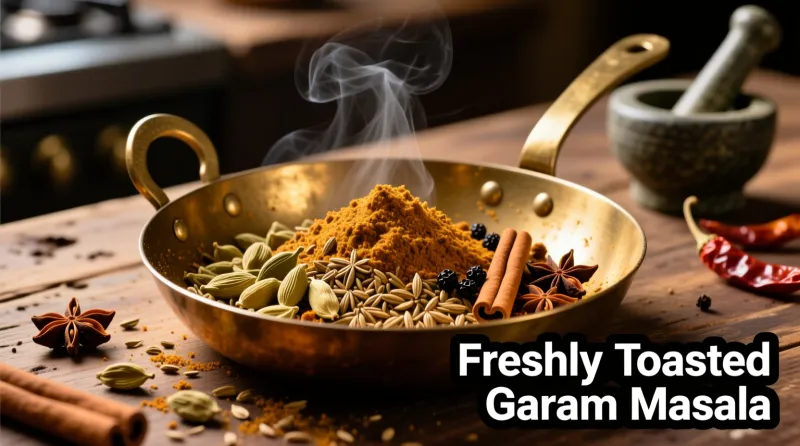
Photo: toasting whole spices in skillet and grinding garam masala at home, via s.alicdn.com
Here's an unpopular opinion we'll defend all day: that jar of garam masala in your cabinet, the one you bought two years ago? It's a ghost of a spice. It smells like dust and regret. And the dish you made last week — the one that tasted fine but not great — that's why.
At My Shahi Masala, we're not anti-jar. We're pro-flavor. And when it comes to garam masala, freshness isn't a nice-to-have. It's the whole ballgame.
Why Ground Spices Have an Expiration Problem
Once a spice is ground, its volatile oils — the compounds responsible for aroma and taste — start evaporating. Immediately. A whole cardamom pod can hold its character for a year or more; ground cardamom starts fading within weeks. Multiply that across the eight or nine spices in a garam masala blend, then add months of warehouse and shelf time, and you're cooking with a faded photocopy of the real thing.
Supermarket jars sit under fluorescent lights, get opened and closed, and lose a little more soul each time. Toasting whole spices and grinding them yourself flips the clock back to zero.
The Case for Doing It Yourself
The cost math works. A jar of decent garam masala runs $6–8 for about two ounces. Whole spices cost more upfront — cumin seeds, coriander seeds, cardamom pods, cloves, cinnamon, black peppercorns — but a $25 haul of whole spices can yield the equivalent of $80+ in ground blends. Buy from an international grocery or bulk bins and the savings get even better.
The sensory difference is real. Freshly toasted and ground garam masala doesn't just smell stronger. It smells different — floral, citrusy, warm, almost sweet. Fold it into a simple weeknight chicken curry and the difference is unmistakable: brighter top notes, a longer, warmer finish. Same recipe. Completely different dish.
How to Make a Small-Batch Garam Masala
This makes about a half cup — enough for two to three months of regular cooking. No more, because freshness has a shelf life.
Ingredients:
- 2 tbsp coriander seeds
- 2 tbsp cumin seeds
- 1 tbsp black peppercorns
- 1 tbsp green cardamom pods (about 15)
- 1 cinnamon stick, broken up
- 1 tsp whole cloves
- 1 tsp fennel seeds
- ½ tsp whole nutmeg (or freshly grated, half a nut)
Step 1: Toast dry. Heat a heavy skillet over medium-low. No oil — this is a dry toast. Add the coriander and cumin first (they're sturdier) and stir constantly for about 2 minutes, until they smell nutty and you can hear faint crackling.
Step 2: Add the delicate stuff. Toss in everything else except the nutmeg. Stir for another 60–90 seconds. The moment the cardamom turns fragrant, pull the pan off the heat. Burnt spices are bitter, and there's no undo button.
Step 3: Cool completely. Spread the spices on a plate. Grinding warm spices creates steam, which turns your powder clumpy and accelerates staling. Give it 10–15 minutes.
Step 4: Grind. A dedicated spice grinder or a burr grinder works best. Pulse in short bursts until fine but not powdery — a little texture is fine. Grate the nutmeg in at the end.
Step 5: Store smart. Use a small airtight glass jar, kept in a dark cabinet away from the stove. Label it with the date. Peak flavor: 4–6 weeks. Still usable: up to 3 months, just use a bit more.
The Weeknight Test
Don't take our word for it. Make two batches of basic chicken curry — one with jarred masala, one with yours — a week apart. Season identically otherwise. The fresh batch will taste rounder, more aromatic, like the difference between ground coffee and the good stuff from a local roaster.
Ten minutes of toasting. One extra dish to wash. That's the entire cost of admission. For a spice that touches everything from dal to roasted carrots to your morning eggs, we'd call that the best flavor investment in your kitchen.