Before the Gold Hits Your Jar: Following Turmeric, Cumin, and Cardamom Back to the Farm
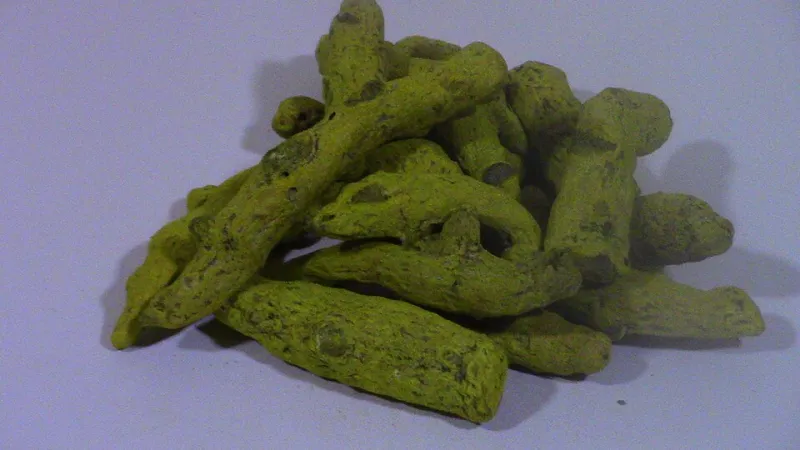
Photo: NanaYawBotar, CC BY-SA 4.0, via Wikimedia Commons
You know exactly where your coffee comes from. Maybe you've got opinions on it — single origin, washed process, the elevation of the farm. But the turmeric sitting in your cabinet? Most of us can't name the state it grew in, let alone the harvest season.
That's about to change. We talked with spice importers and growers to follow three everyday spices — turmeric, cumin, and cardamom — from Indian soil to American shelves. What we learned: the spice in that little jar lived an entire life before you ever smelled it.
Turmeric: Boiled, Dried, and Judged Like a Beauty Pageant
Turmeric rhizomes are dug up in winter, mostly in states like Telangana and Tamil Nadu, when the plants' leaves yellow and die back — the plant's own signal that the underground gold is ready. Fresh from the earth, turmeric looks like knobby ginger's moodier cousin.
Then the transformation begins. The rhizomes are boiled within days to gelatinize the starch and lock in color, then sun-dried for weeks until they're hard enough to clink against each other. Only then do they go to the polishing and grading stage, where they're sorted by curcumin content — the compound responsible for both the color and much of the health halo.
"High-curcumin lots sell out first," one importer told us. "American buyers are finally asking about curcumin percentage the way they ask about coffee altitude. That's new. Ten years ago nobody cared."
Cumin: The Harvest That Waits on the Weather
Cumin is a drama queen of an annual crop. It's sown in November and harvested in February in Gujarat and Rajasthan, and the entire crop's fate hangs on a few weeks of weather. Too much rain at flowering and the seed sets poorly. A heat wave at harvest and the seeds shatter in the field.
After harvest, the plants dry in the sun before threshing separates the seeds. Then comes cleaning and grading by size, color, and oil content — the volatile oils that carry cumin's warm, earthy punch. Seeds destined for the US export market are often steam-sterilized rather than irradiated, a detail worth knowing if you care about flavor integrity.
Cardamom: The World's Most Patient Spice
Green cardamom grows on shade-loving plants in the misty hills of Kerala's Western Ghats, on the same slopes that grow coffee and pepper. The pods are hand-picked one by one, often multiple times per season as they ripen at different rates. Each pod is cured at low heat to preserve that eucalyptus-sweet aroma.
This is why cardamom commands prices that make people gasp at the register. It's not marketing. It's manual labor on a mountain.
What "Fresh Crop" Actually Means
Here's the label that confuses everyone. "Fresh crop" on a spice bag refers to the most recent harvest year — spices, unlike coffee, are seasonal crops. Turmeric harvested in early 2024 and ground in mid-2024 is "fresh crop" through roughly 2025. After that, it's still safe, but the volatile oils that make spice sing have quietly packed their bags.
Whole spices hold those oils far longer than ground. A whole cumin seed can stay punchy for two years; ground cumin starts fading in months. Which brings us to the practical part.
Shop Like a Coffee Nerd
- Buy whole whenever possible. Grind small batches in a cheap dedicated coffee grinder. The aroma difference is not subtle.
- Ask the harvest year. Reputable brands — especially those selling single-origin — will tell you. If the packaging has no date at all, be suspicious.
- Look for origin, not just "product of India." Kerala cardamom and Assam cardamom are different beasts. So are the cumin regions.
- Check the color. Vibrant turmeric means high curcumin. Dull, brownish powder means it's been sitting around.
- Store like coffee too. Airtight, dark, cool. Above the stove is the worst spot in your kitchen.
The spice trade built empires — literal ones. The least we can do is give the results of that journey the same attention we give a bag of beans from a Brooklyn roaster. Your next pot of dal will taste the difference.