Sorry, But the British Invented Your Supermarket Curry Powder (Here's What to Buy Instead)
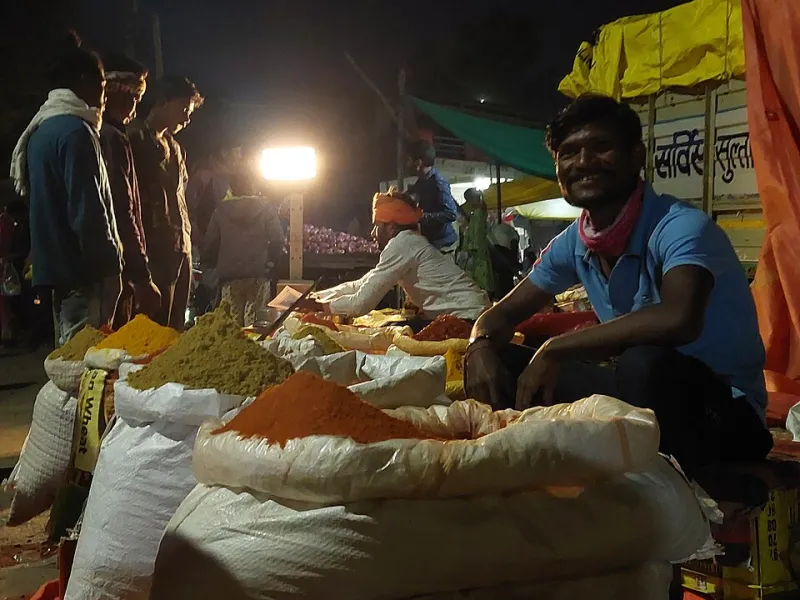
Photo: The open draft, CC BY-SA 4.0, via Wikimedia Commons
Walk down the spice aisle of any Kroger, Safeway, or Target in America and you'll find it: a small jar of yellow powder labeled "curry powder," sitting right next to the oregano and paprika like it belongs there. It's the default assumption for anyone approaching Indian food for the first time — buy the curry powder, sprinkle it on chicken, done.
Here's the awkward truth: if you handed that jar to a home cook in Delhi or Chennai or Lahore, they'd be confused. Curry powder isn't Indian. It never was. And understanding why is the single fastest way to level up everything you cook.
A Powder Born in London, Not Mumbai
The story starts with the British East India Company. When colonial officials returned home from India in the 18th and 19th centuries, they craved the food they'd eaten abroad — but hauling back dozens of individual spices wasn't practical. So British merchants did what merchants do: they simplified. They blended turmeric, coriander, cumin, and fenugreek into one shelf-stable powder, slapped a generic name on it, and sold it as a souvenir of the Raj.
The word "curry" itself is a colonial flattening — likely anglicized from the Tamil kari (sauce or relish) — applied to thousands of distinct regional dishes that share almost nothing in common. A Goan vindaloo, a Kashmiri rogan josh, and a Bengali shorshe ilish are as different from each other as gumbo is from New England clam chowder. "Curry powder" treats them all as one flavor.
The result is a blend designed for export, not for taste. It's heavy on turmeric (cheap, golden, familiar), light on aromatics, and missing the fresh-roasted depth that makes Indian food sing. It's fine in a pinch. But it's a postcard of a cuisine, not the cuisine.
What Indian Kitchens Actually Use
Here's the shift that changes everything: most Indian home cooking isn't built on pre-made blends at all. It's built on a small arsenal of whole and single ground spices, combined fresh every time you cook.
Think of it like the difference between Italian seasoning and an actual Italian grandmother's pantry. The grandmother has basil, oregano, garlic, and tomatoes — separate ingredients, deployed by feel. That's how a masala dabba (the round spice tin found in most Indian kitchens) works. Yours might include:
- Cumin seeds — bloomed in hot oil, they're the opening chord of countless dishes
- Coriander (ground) — the citrusy, floral backbone
- Turmeric — earthy color and warmth, used in modest amounts
- Mustard seeds — the pop-and-sizzle of South Indian cooking
- Garam masala — a finishing blend of warm spices, added at the end of cooking
- Dried red chiles or chili powder — heat, calibrated to your table
That last bullet on garam masala matters: it's the one blend you'll actually see in Indian homes, and it's nothing like supermarket curry powder. It contains no turmeric at all. It's warming, aromatic, and meant to finish a dish, not define it.
Your Spice Aisle Translation Guide
Good news: you don't need a specialty store to start. Most mid-size American supermarkets now carry the essentials. Here's what to swap:
| If your recipe calls for... | Buy this instead |
|---|---|
| Curry powder | Ground coriander + ground cumin + a pinch of turmeric |
| Curry powder (finishing touch) | Garam masala |
| "Indian spice mix" | Whole cumin seeds + mustard seeds for tempering |
| Cayenne "for Indian heat" | Kashmiri chili powder (color and warmth, gentler heat) |
That first row is your workhorse. Two parts coriander, one part cumin, half part turmeric gets you remarkably close to the base of a real masala — and once you bloom those spices in hot oil with some onion, garlic, and ginger, the gap between your kitchen and your favorite restaurant narrows fast.
One Upgrade Trip, Max
When you're ready for the next level, find an Indian or South Asian grocery — nearly every American metro has one, from Edison, New Jersey to the strip malls of suburban Dallas. Prices are often half of what you'd pay at the big-box store, quantities are generous, and the spices sit in high-turnover bins, meaning they're fresher than anything that's been sitting under fluorescent lights for a year.
Your shopping list: whole cumin seeds, whole coriander seeds, black mustard seeds, Kashmiri chili powder, cardamom pods, and a proper garam masala (or grab whole spices and toast-and-grind your own — a $15 spice grinder pays for itself in one batch).
The Royal Takeaway
Curry powder isn't evil — it's just a historical artifact wearing a costume. Real Indian flavor comes from a handful of individual spices, toasted, bloomed, and layered with intention. Start with the coriander-cumin-turmeric trio this week, finish your next pot of dal with real garam masala, and taste the difference a 200-year-old marketing shortcut was hiding from you.
Your spice rack — and everyone eating at your table — will never go back.